2026-10-22 ·
Troubleshooting Dryer Vent Blockages Common In Stanford Homes
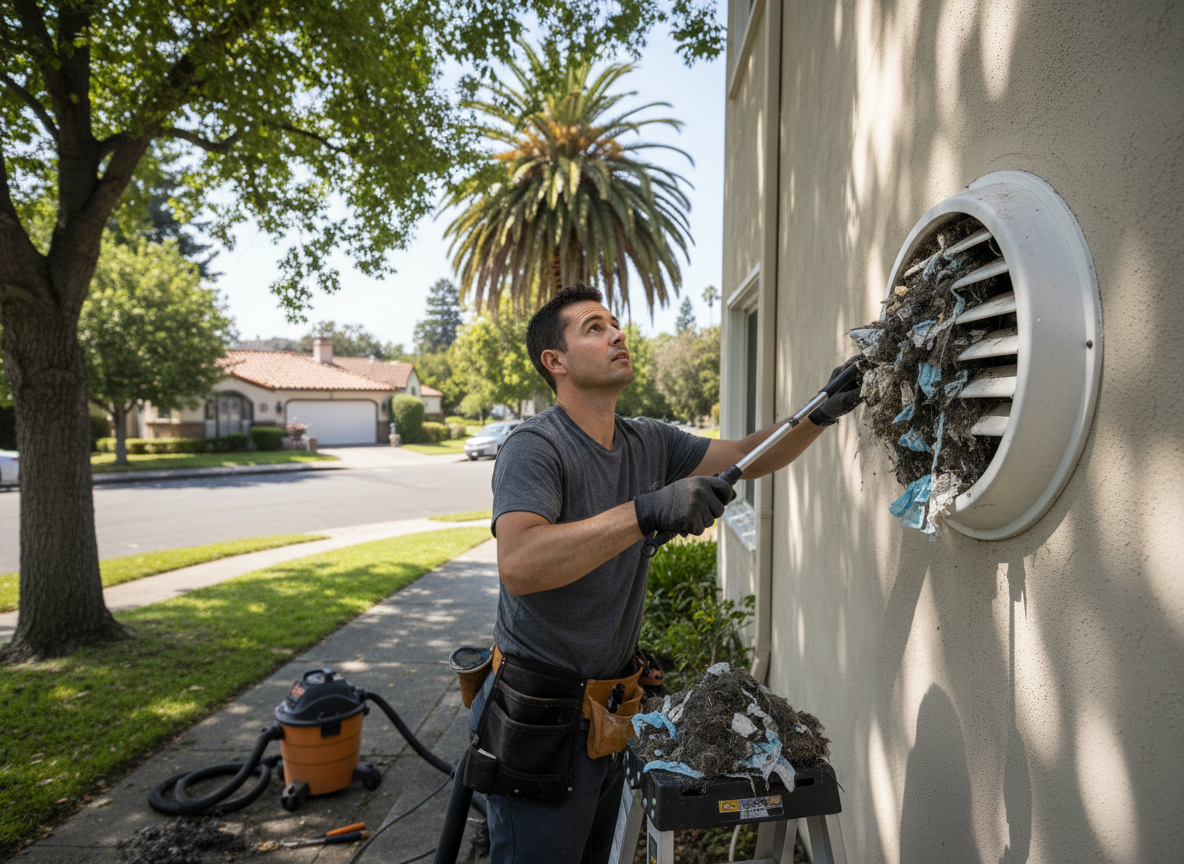
Dryer vent blockages in Stanford homes typically stem from lint accumulation that builds over 8–12 years in homes around the Stanford University Campus and near Hoover Tower. The mild Mediterranean climate keeps humidity low but allows fine dust from Santa Clara County terrain to mix with lint, narrowing 4-inch vents faster than in wetter regions. Homeowners in these areas should inspect exterior vents monthly during peak laundry seasons to prevent restricted airflow that forces dryers to run 20–30 minutes longer per load.
Common Causes in Local Housing Stock
Stanford residences built before 1980 near Stanford Stadium often have rigid metal vents that collect lint at elbows and roof terminations because of tight bends installed during original construction. The mild Mediterranean climate reduces moisture-related clogs but increases static that holds lint against vent walls in Palo Alto and Menlo Park border homes. Soil conditions in Santa Clara County contribute fine particles that enter through outdoor vent covers, compounding the problem in single-story ranch homes common around the campus. Regular cleaning every 12–18 months prevents full blockages that raise fire risk and extend drying times beyond normal cycles.
Recognizing Blockage Symptoms Early
A dryer that feels hot to the touch on the exterior cabinet signals restricted exhaust in Stanford homes, where the mild climate means operators rarely notice overheating until performance drops. Clothes that remain damp after a full cycle or produce a burning smell indicate lint buildup exceeding 50% of vent diameter near Hoover Tower neighborhoods. Increased energy use appears on utility bills when vents in Menlo Park-adjacent properties force the appliance to work harder against backpressure. These signs appear sooner in campus-area homes with longer horizontal runs than in newer builds.
Step-by-Step Inspection Process
Begin by disconnecting power and pulling the dryer away from the wall to check the flexible transition hose for kinks or tears common in Stanford rentals. Remove the exterior vent cover and use a flashlight to look for lint mats thicker than 1/4 inch inside the 4-inch duct. Run a vent brush or leaf blower on low through accessible sections while someone monitors the roof termination near Stanford Stadium for debris ejection. Test airflow with a tissue held to the vent opening—if it fails to stand upright, the line requires further clearing before reconnecting the dryer.
Professional Intervention Points
When DIY clearing fails to restore full airflow or the vent runs through finished walls in older Stanford University Campus homes, contact technicians for dryer repair that includes camera inspection of hidden sections. Blockages near roof lines or in multi-story properties around Hoover Tower often need specialized equipment to avoid damaging original ductwork. Technicians familiar with Santa Clara County conditions also check for crushed sections caused by attic insulation settling over decades. Oven repair teams sometimes spot related exhaust issues during combined visits to nearby Palo Alto homes.
Prevention for Long-Term Reliability
Install a lint trap booster fan rated for 4-inch ducts in homes where runs exceed 25 feet, a common layout in Menlo Park border properties. Clean the interior lint filter after every load and schedule annual professional service to maintain vents in the mild Mediterranean climate that otherwise hides gradual buildup. Replace flexible transition hoses every 5 years to avoid tears that allow lint escape into wall cavities near Stanford Stadium. These steps keep drying times under 45 minutes and reduce stress on heating elements in local appliance repair calls.